ISAs Explained: How ISAs Work in 2026/27
In short
- You can pay up to £20,000 into ISAs in the 2026/27 tax year, split across any mix of ISA types.
- Interest, income and gains inside an ISA are tax-free, and growth doesn't use up your allowance.
- Lifetime ISAs add a 25% government bonus, but most other withdrawals cost 25%, which is more than the bonus.
- Move an ISA by asking the new provider to transfer it. Withdrawing it yourself loses the tax-free status.
- From 6 April 2027 the cash ISA limit falls to £12,000 for people under 65.
- Total ISA allowance, 2026/27
- £20,000
- Lifetime ISA limit (within the £20,000)
- £4,000
- Lifetime ISA bonus, up to £1,000 a year
- 25%
- Junior ISA limit, 2026/27
- £9,000
On this page
An ISA (Individual Savings Account) is a tax-free wrapper for your savings and investments. You don’t pay tax on interest from cash in an ISA, or on income or capital gains from investments held in one. In the 2026/27 tax year, which runs from 6 April 2026 to 5 April 2027, you can put up to £20,000 into ISAs.
The key numbers for 2026/27
| Rule | 2026/27 |
|---|---|
| Total adult ISA allowance | £20,000 |
| Lifetime ISA limit (counts towards the £20,000) | £4,000 |
| Lifetime ISA government bonus | 25%, up to £1,000 a year |
| Junior ISA limit (separate from yours) | £9,000 |
| Minimum age for an adult ISA | 18 |
| Age range to open a Lifetime ISA | 18 to 39 |
What the allowance is
The £20,000 is the most you can pay in during one tax year across all your ISAs. It is not a limit on how much your ISAs can be worth. Growth, interest and dividends earned inside an ISA don’t use up any allowance, so an ISA can grow well beyond the amounts you paid in.
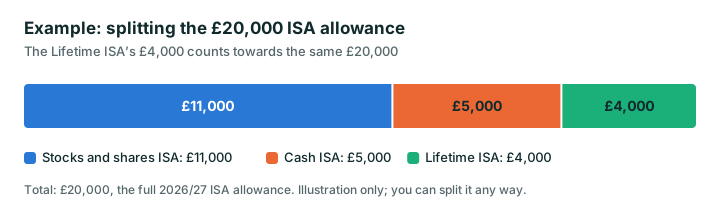
You can put the whole £20,000 into one ISA, or split it across several. Any allowance you don’t use by 5 April is lost; it does not carry over to the next tax year. Our ISA allowance guide covers exactly what counts towards it and what happens if you pay in too much.
The four types of adult ISA
Cash ISA. A savings account where the interest is tax-free. The value doesn’t fall with the stock market, but over long periods interest may not keep up with inflation.
Stocks and shares ISA. Lets you hold investments such as funds, shares, ETFs and bonds. Income and gains are tax-free, but the value can fall as well as rise, and you may get back less than you put in.
Innovative finance ISA. Holds peer-to-peer loans and some other types of lending. These carry the risk that borrowers don’t repay.
Lifetime ISA. Designed for buying your first home or saving for later life. It can hold cash or investments, and the government adds a bonus. It has its own rules, covered below and in our Lifetime ISA guide.
Who can open an ISA
You must be 18 or over and resident in the UK. Members of the armed forces and Crown servants who live abroad, and their spouses or civil partners, can also qualify. An ISA is always in one person’s name: you can’t hold an ISA jointly with someone else.
Lifetime ISAs
You can open a Lifetime ISA if you’re aged 18 to 39, and you must make your first payment before you turn 40. You can pay in up to £4,000 each tax year until you’re 50, and that £4,000 counts towards your overall £20,000 allowance. You can only pay into one Lifetime ISA in a tax year.
The government adds a 25% bonus on what you pay in, up to £1,000 a year. Paying in the full £4,000 earns the maximum £1,000 bonus.
You can take money out without a charge if you are:
- buying your first home, costing £450,000 or less, at least 12 months after your first payment
- aged 60 or over
- terminally ill, with less than 12 months to live
For any other withdrawal you pay a 25% withdrawal charge. Because the charge applies to the whole amount, including the bonus, it takes back more than the bonus added.
Example: you pay in £4,000 and get a £1,000 bonus, making £5,000. A 25% charge on £5,000 is £1,250, which leaves £3,750. That’s £250 less than you paid in, before any growth or losses.
Junior ISAs
A Junior ISA is a separate tax-free account for a child under 18 who lives in the UK. In 2026/27 up to £9,000 can be paid in, and this does not affect your own £20,000 allowance. Junior ISAs come in cash and stocks and shares versions, and a child can have one or both.
A parent or guardian with parental responsibility opens and manages the account, but the money belongs to the child. The child can take control of the account at 16 and can withdraw the money from 18. A child can’t have both a Junior ISA and a Child Trust Fund. Our Junior ISA guide covers the rules in full.
Taking money out
You can usually withdraw from a cash or stocks and shares ISA whenever you want, though some fixed-rate cash ISAs restrict access. What matters is how a withdrawal affects your allowance.
With most ISAs, money you take out can’t be replaced without using more of your allowance. Some providers offer a flexible ISA, which lets you take money out and put it back in during the same tax year without reducing your allowance. Your provider can tell you whether your ISA is flexible.
Example (from GOV.UK): you pay £10,000 into an ISA and later withdraw £3,000. If the ISA is flexible, you can still pay in up to £13,000 that tax year. If it isn’t, you can pay in only £10,000 more.
Moving an ISA to another provider
To move an ISA, you ask the provider you are moving to to arrange a transfer. Don’t withdraw the money and pay it in yourself: if you do, it loses its ISA status, and you can’t reinvest that part of your tax-free allowance.
You can transfer all or part of an ISA at any time, to the same type of ISA or a different type, including money paid in during previous tax years. Transfers between cash ISAs should take no more than 15 working days, and other transfers no more than 30 calendar days. There are restrictions on transfers involving Lifetime ISAs and Junior ISAs, and some providers charge transfer fees.
The cash ISA change from April 2027
The government has announced that from 6 April 2027 the annual cash ISA limit will fall to £12,000 for people aged under 65. The regulations setting this out were laid before Parliament on 14 September 2026. It does not change the 2026/27 rules described above. The regulations also include rules to stop under-65s getting around the limit, such as restricting transfers from stocks and shares ISAs into cash ISAs; our ISA allowance guide explains them.
Is money in an ISA protected?
ISA protection depends on what the ISA holds, and protects you if a firm fails, not if markets fall.
- Cash held with a UK-authorised bank or building society is protected by the Financial Services Compensation Scheme (FSCS) up to £120,000 per person, per bank, if the firm fails.
- Investments held through an authorised firm are protected up to £85,000 per person, per firm, if the firm fails and can’t return what it holds for you.
The FSCS says it can’t accept claims for poor investment performance. If your investments fall in value, that loss is not covered.
Cash or stocks and shares?
This depends on your circumstances, and we can’t tell you which is right for you. In general terms, cash ISAs suit money you may need soon or can’t afford to see fall in value, while stocks and shares ISAs are usually used for goals at least five years away, because investments can fall in the short term. Free, impartial guidance is available from MoneyHelper.
You can also use our compound interest calculator to see how regular saving grows over time at different rates, and how much fees take.
Sources
- GOV.UK: Individual Savings Accounts (ISAs)
- GOV.UK: How ISAs work
- GOV.UK: Withdrawing your money from an ISA
- GOV.UK: Transferring your ISA
- GOV.UK: Lifetime ISA
- GOV.UK: Who can open a Lifetime ISA
- GOV.UK: Withdrawing money from your Lifetime ISA
- GOV.UK: Junior Individual Savings Accounts
- GOV.UK: Reduction in the cash ISA limit (policy paper, 17 September 2026)
- HMRC: Tax-free savings newsletter 23 (September 2026)
- FSCS: What we cover
- FSCS: Investments
Our guides are general information and education, not personal financial advice. If you are unsure whether an investment is right for you, speak to a regulated financial adviser. Capital at risk. Investments can fall as well as rise, and you may get back less than you put in.