Stocks and Shares ISA vs Cash ISA
In short
- Both share the same £20,000 allowance in 2026/27, and you can split it between them however you like.
- A cash ISA's balance can't fall with markets but may lag inflation. A stocks and shares ISA can grow more, but can also fall.
- Cash usually suits money you'll need within a few years; investing suits goals five or more years away.
- You can switch between types at any time, as long as the new provider arranges the transfer.
- From 6 April 2027 the cash ISA limit falls to £12,000 for people under 65.
- Allowance shared by both, 2026/27
- £20,000
- FSCS limit for cash, per bank
- £120,000
- FSCS limit for investments, per firm
- £85,000
- Cash ISA limit for under-65s from April 2027
- £12,000
On this page
- At a glance
- What they have in common
- The real difference: risk and time
- Access to your money
- What protects your money
- Switching between them
- The cash ISA change from April 2027
- Can you lose money in a stocks and shares ISA?
- Can you have a cash ISA and a stocks and shares ISA at the same time?
- Is a cash ISA worth it if your savings interest is already tax-free?
- What happens to your ISA when you die?
- Questions to ask yourself
- Related guides
- Sources
Cash ISAs and stocks and shares ISAs share the same tax-free wrapper and the same annual allowance, but they work very differently. A cash ISA is a savings account where your balance can’t fall. A stocks and shares ISA holds investments whose value can rise and fall. This guide sets out the differences so you can decide which suits each of your goals.
At a glance
| Cash ISA | Stocks and shares ISA | |
|---|---|---|
| What it holds | Cash, earning interest | Investments such as funds, shares, ETFs and bonds |
| Can the value fall? | No, the balance doesn’t fall with markets | Yes, you may get back less than you put in |
| Tax | No tax on interest | No tax on income or capital gains |
| Usually suits | Money you may need soon, or can’t risk losing | Goals that are years away |
| FSCS protection if the firm fails | Up to £120,000 per person, per bank | Up to £85,000 per person, per firm |
| 2026/27 allowance | Shares the £20,000 total ISA allowance | Shares the £20,000 total ISA allowance |
What they have in common
Both are ISAs, so you pay no tax on what they earn: no tax on interest from a cash ISA, and no tax on income or capital gains from investments in a stocks and shares ISA.
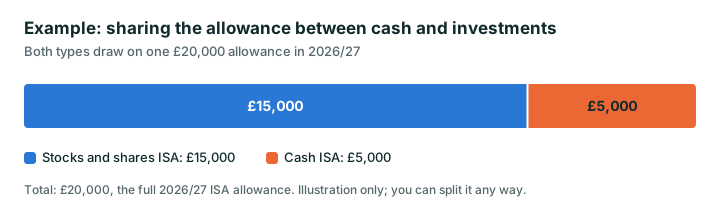
They also share one allowance. In the 2026/27 tax year you can pay up to £20,000 into ISAs in total, and you can split that between a cash ISA and a stocks and shares ISA however you like. For example, you could put £5,000 in cash and £15,000 in stocks and shares.
The real difference: risk and time
A cash ISA pays interest, and your balance doesn’t fall with the stock market. The trade-off is that over long periods, interest may not keep up with rising prices, which means your money can lose buying power even while the number on your statement goes up.
A stocks and shares ISA invests your money. Over long periods investments have the potential to grow more than cash, but there’s no guarantee, and their value can fall sharply in the short term. You could get back less than you put in.
Time is what connects the two. MoneyHelper, the government-backed guidance service, frames investing around goals that are more than five years away, and suggests keeping three to six months of essential spending in cash for emergencies first. A common way to think about it:
- Money you might need within a few years, such as an emergency fund or a house deposit soon, is usually better in cash.
- Money for goals five or more years away has more time to recover from falls, which is why people often invest it.
Many people use both: cash for the near term and investments for the long term.
Access to your money
You can usually withdraw from either type of ISA whenever you want, although some fixed-rate cash ISAs restrict withdrawals or charge a penalty. Selling investments in a stocks and shares ISA can take a few days to turn into cash, and you get whatever they are worth on the day you sell.
With most ISAs, money you take out can’t be put back without using more of your allowance. Some providers offer flexible ISAs, which let you replace withdrawals in the same tax year without reducing your allowance. Our ISA guide explains how that works.
What protects your money
Both types are covered by the Financial Services Compensation Scheme (FSCS), but the protection is different, and it only applies if the firm fails:
- Cash held with an authorised bank or building society is protected up to £120,000 per person, per bank.
- Investments held through an authorised firm are protected up to £85,000 per person, per firm, if the firm fails and can’t return what it holds for you.
The FSCS does not protect against investments falling in value. It says it can’t accept claims for poor investment performance.
Switching between them
You don’t have to choose once and for all. You can transfer all or part of an ISA to a different type of ISA, including money you paid in during previous tax years. Always ask the new provider to arrange the transfer. If you withdraw the money and pay it in yourself, it loses its ISA status and you can’t reinvest that part of your allowance.
The cash ISA change from April 2027
From 6 April 2027 the annual cash ISA limit falls to £12,000 for people aged under 65, under regulations laid before Parliament on 14 September 2026. The overall £20,000 allowance stays, so the other £8,000 can go into stocks and shares. Under-65s also won’t be able to transfer money from a stocks and shares ISA into a cash ISA. The 2026/27 rules described here are unchanged, and our ISA allowance guide explains the new rules in full.
Can you lose money in a stocks and shares ISA?
Yes. A stocks and shares ISA protects your investments from tax, not from falling prices. MoneyHelper says you should only use one if you’re comfortable that the value of your investments can go up and down and that you might get back less than you put in. It also points out that you won’t get any compensation if your investments simply fall in value.
How much you could lose depends on what the ISA holds. A single company’s shares can fall sharply or become worthless. A fund spread across hundreds of companies, such as an index fund, still falls when markets fall, but one company doing badly has much less effect. For a diversified fund, a fall in value only becomes a realised loss if you sell while prices are down, which is why time matters so much: money you can leave invested for five years or more has longer to recover.
Can you have a cash ISA and a stocks and shares ISA at the same time?
Yes. You can pay into both in the same tax year, as long as the total stays within £20,000. Since 6 April 2024 you can even pay into more than one ISA of the same type in a year. GOV.UK’s own examples include £15,000 in a cash ISA, £2,000 in a stocks and shares ISA and £3,000 in an innovative finance ISA, or £10,000 in one cash ISA and £3,000 in another. Our ISA allowance guide covers what counts towards the limit.
Is a cash ISA worth it if your savings interest is already tax-free?
Many people pay no tax on savings interest even outside an ISA, thanks to the Personal Savings Allowance. In 2026/27 it lets you earn this much interest tax-free each year:
| Income tax band | Personal Savings Allowance |
|---|---|
| Basic rate | £1,000 |
| Higher rate | £500 |
| Additional rate | £0 |
If your other income is low, the starting rate for savings can add up to £5,000 more of tax-free interest. It shrinks by £1 for every £1 of other income above your £12,570 Personal Allowance, and disappears once that income reaches £17,570.
A cash ISA still has advantages. Interest in an ISA never uses up these allowances, so they stay free for interest on other savings. ISA interest doesn’t need reporting to HMRC. And money in an ISA stays tax-free in future years, however much your savings grow. That matters more from 6 April 2027, when tax rates on savings interest outside ISAs rise to 22%, 42% and 47%, under the Finance Act 2026.
What happens to your ISA when you die?
ISA investments stay free of income tax and Capital Gains Tax while the estate is being dealt with, for up to three years. If you were married or in a civil partnership and living together, your spouse or partner can also pay in an additional permitted subscription. This is a one-off ISA allowance on top of their own £20,000, up to the value of your ISAs when you died or when the account is closed, whichever is higher. It means the savings can stay tax-free even if they go to someone else under your will. The ISA itself can still count towards your estate for inheritance tax.
Questions to ask yourself
- When will I need this money? The sooner you need it, the stronger the case for cash.
- How would I feel if it fell by a fifth in a bad year? If you’d need to sell, investing may not suit that money.
- Do I have an emergency fund in cash already? MoneyHelper suggests sorting that first.
- What will it cost? Stocks and shares ISAs carry platform and fund charges. Our guide to platform fees explains them.
To see how different growth rates and fees could play out over your own timescale, try our compound interest calculator. Free, impartial guidance is available from MoneyHelper.
Sources
- GOV.UK: Individual Savings Accounts (ISAs)
- GOV.UK: How ISAs work
- GOV.UK: Transferring your ISA
- GOV.UK: Reduction in the cash ISA limit (policy paper, 17 September 2026)
- HMRC: Tax-free savings newsletter 23 (September 2026)
- MoneyHelper: Investing for beginners
- FSCS: What we cover
- FSCS: Investments
- GOV.UK: Tax on savings interest, how much is tax-free
- Finance Act 2026, section 5: savings income rates
- GOV.UK: Inheriting an ISA from your spouse or civil partner
- MoneyHelper: Stocks and shares ISAs
Our guides are general information and education, not personal financial advice. If you are unsure whether an investment is right for you, speak to a regulated financial adviser. Capital at risk. Investments can fall as well as rise, and you may get back less than you put in.