ISA Allowance 2026/27: Rules and Changes
In short
- You can pay up to £20,000 into ISAs between 6 April 2026 and 5 April 2027, split across any ISA types.
- Only money you pay in counts. Growth, interest and transfers of earlier years' savings don't use any allowance.
- You can pay into more than one ISA of the same type in a year, but only one Lifetime ISA.
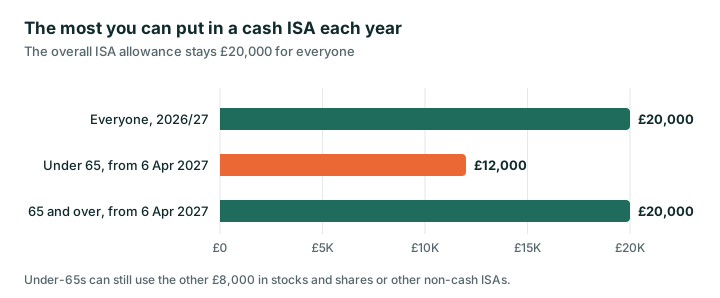
- From 6 April 2027 under-65s can put at most £12,000 a year into cash ISAs. The £20,000 total stays.
- The government has said the £20,000 allowance stays frozen until April 2031.
- ISA allowance, 6 April 2026 to 5 April 2027
- £20,000
- Cash ISA limit for under-65s from 6 April 2027
- £12,000
- Junior ISA limit per child, 2026/27
- £9,000
- Allowances frozen until April of this year
- 2031
On this page
- How much can you put in an ISA in 2026/27?
- When does the ISA allowance reset?
- Can you pay into more than one ISA?
- What counts towards your ISA allowance?
- Can a couple put £40,000 into ISAs?
- What happens if you pay in more than £20,000?
- What changes to the ISA allowance from 6 April 2027?
- How long will the £20,000 ISA allowance stay the same?
- How to make the most of your ISA allowance
- Related guides
- Sources
Your ISA allowance is the most you can pay into ISAs in one tax year without paying tax on the interest, income or gains. For the 2026/27 tax year it is £20,000, and it’s the same for every adult who can open an ISA. This guide covers exactly what counts towards it, what doesn’t, what happens if you go over, and the change to cash ISAs coming in April 2027. For a general introduction to how ISAs work, start with ISAs explained.
How much can you put in an ISA in 2026/27?
| Allowance | 2026/27 | What it covers |
|---|---|---|
| Adult ISA allowance | £20,000 | Everything you pay into cash, stocks and shares, innovative finance and Lifetime ISAs combined |
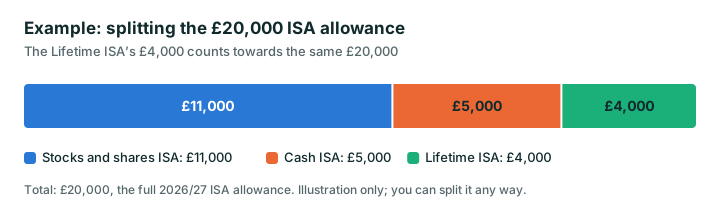
| Lifetime ISA limit | £4,000 | Counts towards your £20,000, not on top of it |
| Junior ISA limit | £9,000 per child | Separate from your own allowance |
| Cash ISA limit | No separate limit until April 2027 | You can put the full £20,000 in cash this year |
You must be 18 or over and UK resident to open an adult ISA. Since April 2024 that applies to cash ISAs too: the old rule that let 16 and 17-year-olds open a cash ISA has gone, although anyone who already held one then can keep it.
When does the ISA allowance reset?
The ISA year follows the tax year, which runs from 6 April to 5 April. Your allowance for 2026/27 started on 6 April 2026 and ends on 5 April 2027. A fresh £20,000 starts on 6 April 2027.
There’s no way to carry unused allowance forward. If you only pay in £8,000 this tax year, the other £12,000 is gone once 5 April passes. If you’re planning to top up near the deadline, check your provider’s cut-off: a payment has to reach the ISA by 5 April to count for that year.
Can you pay into more than one ISA?
Yes. Since April 2024 you can pay into as many ISAs as you like in the same tax year, including several of the same type, as long as the total stays within £20,000. GOV.UK’s own example is £10,000 in one cash ISA and £3,000 in another, with the rest elsewhere. The exception is the Lifetime ISA: you can only pay into one of those each tax year.
What counts towards your ISA allowance?
Only new money you pay in counts. Here’s how the common situations work:
- Deposits and contributions count, whether they’re a lump sum or a monthly payment.
- Growth, interest and dividends earned inside the ISA don’t count. An ISA can grow well beyond £20,000 without affecting what you can pay in.
- Transfers of money from earlier tax years don’t count. You can move an old ISA to a new provider at any time without using any of this year’s allowance.
- Transfers of money paid in this year don’t use extra allowance either. Since April 2024 you can move part of this year’s payments rather than having to move all of them.
- Withdrawals don’t give you allowance back unless the ISA is flexible (see below).
- Lifetime ISA payments count, and so does the money you transfer into a Lifetime ISA from another ISA. The government bonus doesn’t count.
Example: you pay £15,000 into a stocks and shares ISA in May and it grows to £16,500 by March. You can still pay in another £5,000 before 5 April, because only the £15,000 you paid in counts.
What if you take money out?
With most ISAs, a withdrawal doesn’t free up allowance. If your ISA is flexible, you can take money out and put it back in the same tax year without it counting twice.
Example (from GOV.UK): you pay £10,000 into an ISA and later withdraw £3,000. If the ISA is flexible, you can still pay in up to £13,000 that tax year. If it isn’t, you can only pay in £10,000 more.
Flexibility is optional for providers, so check your ISA’s terms. Lifetime ISAs and Junior ISAs can’t be flexible.
Can a couple put £40,000 into ISAs?
Yes, between them. Every adult has their own £20,000 allowance, and ISAs are always in one person’s name, so a couple can’t share or pool an allowance. If one partner doesn’t use theirs, the other can’t use it instead. Each child can also have up to £9,000 a year paid into Junior ISAs, which doesn’t affect either parent’s allowance.
What happens if you pay in more than £20,000?
Paying in too much is usually corrected rather than punished, but the extra loses its tax-free status. Under HMRC’s guidance for ISA providers:
- If you notice in the same tax year, your provider can remove the excess and any gains on it. Tell them as soon as you spot it.
- For earlier tax years, HMRC normally finds the error and writes to you before telling the provider what to do.
- Tax relief on the excess is lost. Interest, dividends and gains on the money over the limit are taxable, and count towards your personal savings or dividend allowance.
The money within the limit keeps its tax-free status. If you hold several ISAs with different providers, it’s worth keeping a simple running total, because no single provider can see what you’ve paid in elsewhere.
What changes to the ISA allowance from 6 April 2027?
From 6 April 2027, people under 65 will only be able to put £12,000 a year into cash ISAs. The overall allowance stays £20,000, so the other £8,000 can still go into stocks and shares or other non-cash ISAs. People aged 65 and over keep a £20,000 cash ISA limit. Nothing changes for the 2026/27 tax year.
The government has also set out rules to stop people getting around the new limit:
- Who counts as 65: the higher cash limit applies for the whole tax year in which you turn 65.
- Transfers into cash: under-65s won’t be able to transfer money from a stocks and shares ISA (or innovative finance ISA) into a cash ISA. Moving cash into investments will still be allowed.
- Cash held in an investment ISA: interest on uninvested cash in a stocks and shares ISA will face a flat 22% charge, paid by the ISA provider to HMRC. You won’t need to declare it yourself.
- Cash-like funds: money market funds will count as cash-like. They can be part of a stocks and shares ISA, but an ISA that holds nothing else won’t qualify.
Shares, funds, investment trusts, ETFs and bonds, including gilts, aren’t treated as cash-like.
The £12,000 limit and these rules are set out in the Individual Savings Account (Amendment) (No. 2) Regulations 2026, which were laid before Parliament on 14 September 2026 and take effect on 6 April 2027. The 22% figure is the basic rate for savings income from April 2027. We’ll update this guide if HMRC publishes more detail.
Example: a 40-year-old in the 2027/28 tax year could put £12,000 into a cash ISA and £8,000 into a stocks and shares ISA. A 66-year-old could put all £20,000 into cash.
How long will the £20,000 ISA allowance stay the same?
HMRC has confirmed the adult ISA allowance stays at £20,000 until April 2031, along with the £9,000 Junior ISA and £4,000 Lifetime ISA limits. The allowance has been £20,000 since 2017/18. Because it isn’t rising with prices, it covers a little less in real terms each year.
How to make the most of your ISA allowance
None of this is personal advice, but these are the practical points most people check:
- Use it or lose it. If you have savings or investments that could go in an ISA, using this year’s allowance before 5 April protects more of them from tax in future.
- Spread payments or invest at once. Regular monthly payments spread the risk of investing just before a fall. A lump sum is invested for longer. Both count towards the allowance in the same way.
- Bed and ISA. If you hold investments outside an ISA, you can sell them and buy them back inside an ISA. The money counts towards your allowance, and the sale can create a gain for Capital Gains Tax if your gains for the year are above the £3,000 annual exempt amount. Our guide to tax on investments explains how that works.
- Check what you pay. Moving an ISA to a cheaper provider doesn’t use any allowance, as long as you transfer it rather than withdrawing it. Our platform fees guide explains what to compare.
If you’re weighing up where your allowance should go, our guides to stocks and shares ISAs versus cash ISAs and the Lifetime ISA cover the trade-offs, and the compound interest calculator shows how regular payments could grow.
Sources
- GOV.UK: Individual Savings Accounts (ISAs)
- GOV.UK: How ISAs work
- GOV.UK: Withdrawing your money from an ISA
- GOV.UK: Transferring your ISA
- GOV.UK: Junior Individual Savings Accounts
- HMRC: Tax-free savings newsletter 19 (November 2025)
- HMRC: Cash ISA limit reduction (tax information and impact note)
- HM Treasury: ISA reform 2027 anti-circumvention rules factsheet
- HMRC: Tax-free savings newsletter 23 (September 2026)
- The Individual Savings Account (Amendment) Regulations 2024, explanatory note
- HMRC: Close, void or repair an ISA (guidance for ISA managers)
- GOV.UK: Capital Gains Tax rates and allowances
Our guides are general information and education, not personal financial advice. If you are unsure whether an investment is right for you, speak to a regulated financial adviser. Capital at risk. Investments can fall as well as rise, and you may get back less than you put in.