Pension Tax Relief Explained (2026/27)
In short
- The government adds tax relief to what you pay into a pension, so £80 from you becomes £100 at the basic rate.
- Higher and additional-rate taxpayers can claim extra relief, so £100 in a pension can cost them £60 or £55.
- You get relief on payments up to 100% of your earnings, or £3,600 a year including relief if you earn less.
- Most people can pay in up to £60,000 a year in total, including employer payments, before a tax charge applies.
- Usually a quarter of a pension can be taken tax-free from 55, rising to 57 from April 2028. The rest is taxed as income.
- Basic-rate relief added to your payments
- 20%
- Annual allowance, 2026/27
- £60,000
- Yearly limit with relief if you have little or no earnings
- £3,600
- Most you can usually take tax-free
- £268,275
On this page
- How does pension tax relief work?
- How do higher-rate taxpayers claim extra relief?
- How does pension tax relief work in Scotland?
- How much can you pay in and get tax relief?
- What is the pension annual allowance?
- How do employer contributions and salary sacrifice work?
- What tax do you pay when you take money out?
- Is a pension or an ISA better for saving?
- Related guides
- Sources
Pension tax relief is money the government adds to your pension, reflecting the income tax you’ve paid on what you put in. At the basic rate, every £80 you pay in becomes £100 in your pension. If you pay a higher rate of income tax, you can claim back more. This guide explains how relief works, the different ways it’s given, how much you can pay in and get relief on, and what happens when you take the money out. Figures are for the 2026/27 tax year.
How does pension tax relief work?
Pension contributions are treated as if they were paid out of income before tax. In practice that happens in one of two ways, depending on your scheme.
Relief at source. You pay in from your take-home pay, and your pension provider claims basic-rate relief of 20% from the government and adds it to your pension. This is how personal pensions and SIPPs work, and many workplace pensions too.
Example (from HMRC’s manual): you pay £80 a month into a relief-at-source pension. Your provider claims £20 from HMRC, so £100 goes into your pension each month.
Net pay. Your employer takes your contribution from your pay before income tax is worked out, so you get relief at your highest rate straight away without claiming anything. The catch is that under net pay, people who earn too little to pay income tax get no relief. From the 2024/25 tax year, HMRC can pay them a top-up instead: it writes to eligible people after the tax year ends, and you need to reply with your bank details to receive it. The payment goes to you, not into your pension.
| Relief at source | Net pay | |
|---|---|---|
| Who uses it | Personal pensions, SIPPs, many workplace schemes | Some workplace schemes |
| How you pay | From take-home pay | From pay before income tax |
| Basic-rate relief | Added by the provider | Built in for taxpayers; non-taxpayers can claim an HMRC top-up |
| Higher-rate relief | You claim it from HMRC | Built in automatically |
How do higher-rate taxpayers claim extra relief?
If your pension uses relief at source, the provider only claims the basic 20%. Higher and additional-rate taxpayers can claim the rest:
- 20% extra on income taxed at 40%
- 25% extra on income taxed at 45%
You claim through your Self Assessment tax return or, if you don’t fill one in, by contacting HMRC. MoneyHelper says you can claim for the current tax year and the previous three. The extra relief usually comes through a lower tax bill or a change to your tax code rather than being added to your pension.
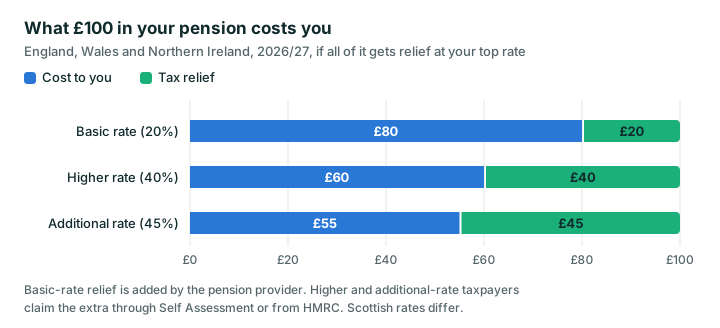
Example: a higher-rate taxpayer pays £8,000 into a SIPP. The provider adds £2,000, so £10,000 goes into the pension. As long as at least £10,000 of their income is taxed at 40%, they can claim another £2,000 from HMRC, so the £10,000 has cost them £6,000.
How does pension tax relief work in Scotland?
Scotland has different income tax bands. In 2026/27 they range from a starter rate of 19% to a top rate of 48%. Pension providers using relief at source still add 20% for everyone, including starter-rate taxpayers, who keep the full 20%. Scottish taxpayers at higher bands can claim extra relief:
| Scottish rate | Extra relief to claim |
|---|---|
| Intermediate rate (21%) | 1% |
| Higher rate (42%) | 22% |
| Advanced rate (45%) | 25% |
| Top rate (48%) | 28% |
How much can you pay in and get tax relief?
You get tax relief on personal contributions up to 100% of your earnings in the tax year. Earnings here means pay from a job or self-employment, not income such as rent or dividends.
If you have little or no earnings, you can still pay in up to £3,600 a year including relief, which means paying £2,880 yourself. This applies to non-earners and to pensions set up for children too.
Example: someone earning £15,000 can pay in up to £15,000 including relief, which means paying £12,000 into a relief-at-source pension. Someone with no earnings can pay £2,880, topped up to £3,600.
What is the pension annual allowance?
The annual allowance is the most that can go into your pensions each tax year, from you, your employer and tax relief combined, before you pay a tax charge. For 2026/27 it is £60,000 for most people. Some people have a lower limit:
- Tapered annual allowance. If your threshold income is over £200,000 and your adjusted income is over £260,000, your allowance falls by £1 for every £2 over £260,000, down to a minimum of £10,000.
- Money purchase annual allowance. Once you start taking taxable money from a defined contribution pension, the limit for further payments into these pensions usually falls to £10,000 a year.
Can you carry forward unused allowance?
Yes. You can use unused annual allowance from the previous three tax years, as long as you were a member of a UK registered pension scheme in those years. You use this year’s allowance first, then the earliest year. Carry forward doesn’t raise the 100%-of-earnings limit on relief for your own payments, so it’s mostly useful for large one-off contributions or employer payments.
How do employer contributions and salary sacrifice work?
Money your employer pays into your pension doesn’t come out of your pay, so there’s no tax relief to add. It still counts towards your annual allowance. Under automatic enrolment, at least 8% of qualifying earnings (between £6,240 and £50,270 a year) must go into a workplace pension, with at least 3% from the employer.
With salary sacrifice, you give up part of your salary and your employer pays it into your pension instead. That saves income tax and also National Insurance for both you and your employer. From 6 April 2029, National Insurance relief will be capped: sacrificed pay above £2,000 a year will pay National Insurance. Income tax relief isn’t affected. The cap is set out in the National Insurance Contributions (Employer Pensions Contributions) Act 2026, with detailed rules still to come.
What tax do you pay when you take money out?
Tax relief on the way in is balanced by tax on the way out:
- Tax-free cash. You can usually take a quarter of your pension tax-free, up to a lifetime limit of £268,275 (the lump sum allowance), unless you have protection for a higher amount.
- The rest is taxed as income. Withdrawals beyond the tax-free part are added to your other income for the year and taxed at your income tax rate. Your first withdrawal is often taxed on an emergency tax code, and you can claim back any overpayment.
- When you can start. Most people can take money from a personal pension from 55, rising to 57 from 6 April 2028, unless they have a protected earlier pension age.
Pensions and inheritance tax from April 2027
From 6 April 2027, unused pension savings and most death benefits will count towards your estate for inheritance tax. This is now law under the Finance Act 2026. Pensions left to a spouse or civil partner, or to charity, stay exempt, and death-in-service benefits are excluded. It doesn’t change the tax relief you get on payments in, but it may affect how people plan to pass on what’s left.
Is a pension or an ISA better for saving?
They suit different goals and many people use both. The main differences:
- Tax relief: a pension adds relief on the way in; an ISA doesn’t. A Lifetime ISA adds a 25% bonus, on up to £4,000 a year.
- Access: an ISA can usually be used at any time; a pension is locked until 55, rising to 57.
- Tax on the way out: ISA withdrawals are tax-free; most pension withdrawals are taxed as income.
- Employer money: only a workplace pension gets employer contributions.
For how ISAs work, see ISAs explained. If you want to choose your own pension investments, our guide to SIPPs explains how they work. For free, impartial guidance on pensions, MoneyHelper runs a helpline, and Pension Wise offers free appointments if you’re 50 or over.
Sources
- GOV.UK: Tax on your private pension contributions, tax relief
- HMRC Pensions Tax Manual PTM044220: relief at source
- HMRC Pensions Tax Manual PTM044100: the basic amount
- HMRC: Pension schemes rates and allowances
- GOV.UK: Annual allowance
- GOV.UK: Work out your tapered annual allowance
- GOV.UK: Work out your allowances if you've flexibly accessed your pension
- GOV.UK: Check if you have unused annual allowances
- GOV.UK: Scottish Income Tax
- HMRC: Pensions relief relating to net pay arrangements
- MoneyHelper: Tax relief and your pension
- GOV.UK: Workplace pensions, what you, your employer and the government pay
- HMRC: Salary sacrifice reform for pension contributions from 6 April 2029
- National Insurance Contributions (Employer Pensions Contributions) Act 2026, section 1
- GOV.UK: Lump sum allowance
- Finance Act 2022, section 10: normal minimum pension age
- HMRC: Inheritance Tax on unused pension funds and death benefits
Our guides are general information and education, not personal financial advice. If you are unsure whether an investment is right for you, speak to a regulated financial adviser. Capital at risk. Investments can fall as well as rise, and you may get back less than you put in.