Budget 2026: What Changed for Savers
TL;DR
- The planned £12,000 cash ISA limit for under-65s is cancelled. Everyone 18 or over can still put the whole £20,000 into cash.
- From 6 April 2027, tax on savings interest outside ISAs rises to 24%, 44% and 49%. The Personal Savings Allowance stays the same.
- From 29 October 2026, the Lifetime ISA charge for buying a first home over £450,000 falls from 25% to 20%.
- For 2027/28 to 2029/30, people over State Pension age with total income up to the full new State Pension pay no income tax.
- Dividend tax, Capital Gains Tax, pension allowances, the ISA allowance and Inheritance Tax thresholds don't change.
Quick answers
- NoIs the cash ISA limit being cut? No. The £12,000 plan is cancelled, so any adult can put the full £20,000 into cash ISAs.
- LimitDid the ISA allowance change? No. It stays £20,000 a year, frozen until April 2031. The Junior ISA limit stays £9,000.
- Watch outWill tax on savings interest rise? Yes, from 6 April 2027: 24%, 44% or 49% on interest above your allowances, outside an ISA.
- DateWhat changed for the Lifetime ISA? From 29 October 2026, the charge for a first home over £450,000 is 20%, down from 25%.
- DependsAre the linked cash ISA rules dropped? Yes. HMRC says the anti-circumvention rules won't take effect; the regulations containing them will be revoked.
- DependsWill the State Pension alone be taxed? Not if it's no more than the full new rate: the Pension Tax Allowance covers 2027/28 to 2029/30.
- Cash ISA limit for all ages, unchanged
- £20,000
- Basic-rate tax on savings interest from April 2027
- 24%
- Lifetime ISA charge for a first home over £450,000
- 20%
- Full new State Pension in 2027/28, the Pension Tax Allowance threshold
- £13,036.40
On this page
- What changed for ISAs at Budget 2026?
- What happened to the Lifetime ISA?
- How much more tax will you pay on savings interest?
- What changed for pensions?
- Did dividend tax or Capital Gains Tax change?
- What about National Insurance, the State Pension and Inheritance Tax?
- What’s reported but not yet confirmed?
- Key dates from the Budget
- Common questions about Budget 2026
- Key points
- What to do next
- Related guides
- Sources
The Chancellor delivered the Budget on Wednesday 28 October 2026. For savers and investors, the headlines are a U-turn on cash ISAs, a further rise in tax on savings interest, a smaller Lifetime ISA charge for homes above the price cap and a new tax break for pensioners. This guide sets out what changed, what didn’t, and what’s still waiting for detail from HMRC. We’ve checked each change against the Treasury’s Budget documents; where only news reports cover something, we say so.
What changed for ISAs at Budget 2026?
The biggest change is one that won’t happen. The government had planned that from 6 April 2027, people under 65 could pay at most £12,000 a year into cash ISAs, within the £20,000 overall allowance. The Budget cancelled that plan. The Treasury’s Budget press release says the government is keeping “the £20,000 cash ISA limit for everyone”.
So in 2026/27 and 2027/28 you can split the £20,000 allowance between cash ISAs, stocks and shares ISAs, innovative finance ISAs and a Lifetime ISA however you like, at any age from 18. The allowance is still frozen at £20,000 until April 2031, and the Junior ISA limit stays £9,000.
The government says the £20,000 cash ISA limit will be kept for all savers over 18 from April 2027, by regulations to be laid before Parliament in November 2026. The cash limit had come with rules to stop people getting around it, set out in regulations that were due to take effect on 6 April 2027:
- a ban on under-65s transferring from a stocks and shares ISA into a cash ISA
- a 22% charge on interest from uninvested cash held in a stocks and shares ISA
- tests treating money market funds and similar holdings as cash-like
HMRC’s October 2026 tax-free savings newsletter confirms the cash ISA limit stays £20,000 from 6 April 2027, and says the associated anti-circumvention rules won’t take effect: the ISA (Amendment) (No. 2) Regulations 2026, which contained them, including the restriction on transfers into cash ISAs, will be revoked. Which? reports that the 22% charge has gone with them.
The government also says it will explore a new incentive for people opening a stocks and shares ISA for the first time, designed with the industry. There are no details yet.
What happened to the Lifetime ISA?
Two things. First, from 29 October 2026 the charge for using a Lifetime ISA to buy a first home costing more than £450,000 falls from 25% to 20%, by regulations laid on Budget day. The price cap itself hasn’t changed. The Treasury confirms that other unauthorised withdrawals, for anything except a first home, reaching 60 or terminal illness, still cost 25%.
The lower charge matters because a 25% charge on the whole balance takes back more than the 25% bonus. A 20% charge takes back roughly the bonus and no more.
Example: you pay £4,000 into a Lifetime ISA and the government adds a bonus, making £5,000. If you use it towards a £500,000 first home, the 20% charge is £1,000, leaving £4,000, the amount you paid in. Under the old 25% charge you’d have kept £3,750. This ignores interest and investment growth.
Second, a new First Time Buyer ISA will replace the Lifetime ISA for new savers. The Treasury’s Budget documents say it will pay a 25% government bonus on the final balance, up to a maximum of £20,000, paid when you withdraw it for a first home worth up to £450,000. It’s due to launch in April 2029, once legislation has passed. People who already have a Lifetime ISA keep the current rules. Our Lifetime ISA guide covers the rules in full.
How much more tax will you pay on savings interest?
Interest earned outside an ISA or pension is taxed as savings income once it’s above your allowances. The Finance Act 2026 had already set the rates to rise from 20%, 40% and 45% to 22%, 42% and 47% from 6 April 2027. The Budget added another two percentage points, so from 2027/28 the rates will be:
| Taxpayer | 2026/27 | Previously legislated for 2027/28 | 2027/28 after Budget 2026 |
|---|---|---|---|
| Basic rate | 20% | 22% | 24% |
| Higher rate | 40% | 42% | 44% |
| Additional rate | 45% | 47% | 49% |
The Personal Savings Allowance stays at £1,000 for basic-rate taxpayers and £500 for higher-rate taxpayers, and the £5,000 starting rate for savings stays too. The same rates apply to property income in England, Wales and Northern Ireland. The Treasury says 84% of taxpayers won’t see their tax bill rise.
Example: someone earns £3,000 of interest a year on savings outside an ISA. As a basic-rate taxpayer, £2,000 is above the allowance: the tax is £400 in 2026/27, would have been £440 at the previously legislated rate, and will be £480 in 2027/28. As a higher-rate taxpayer, £2,500 is taxable: £1,000 now, £1,050 at the old plan and £1,100 from April 2027.
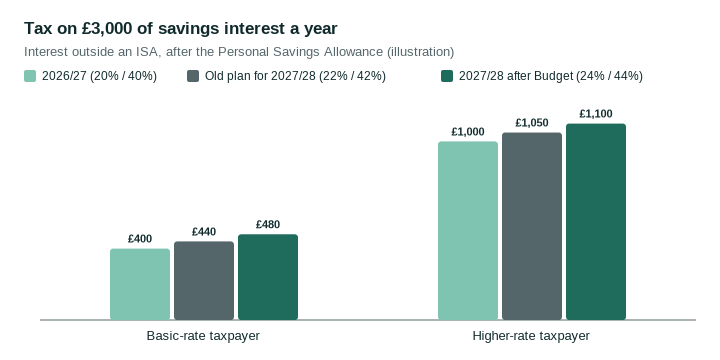
Interest inside a cash ISA or stocks and shares ISA stays tax-free, so the rise makes ISAs more valuable for anyone with savings interest above their allowance. Interest distributions from bond funds held outside an ISA are taxed as savings income too. Our guide to tax on investments explains how each kind of income is taxed.
What changed for pensions?
From 6 April 2027, there will be a Pension Tax Allowance, first announced at Budget 2025 and set out in detail on Budget day. It covers people above State Pension age whose total income is no more than the full new State Pension, which the Treasury puts at £13,036.40 for 2027/28, about £250.70 a week. They won’t pay income tax. The allowance is worth 20% of the gap between the full new State Pension and the £12,570 Personal Allowance, and it’s withdrawn by £1 for every £3 of income above £13,036.40, so it’s gone once total income reaches £13,319.
Without it, the full new State Pension would be above the Personal Allowance from April 2027, which is frozen until April 2031, so people with only the State Pension would start paying a small amount of tax. The Treasury says you won’t need to claim: HMRC applies the allowance automatically. It’s available for 2027/28, 2028/29 and 2029/30, and the government will review it after that. It expects about 500,000 pensioners to benefit in 2027/28, around 290,000 of them paying no tax at all. Our State Pension guide explains how the State Pension is taxed.
The main pension allowances are unchanged in the Budget’s rates annex. The annual allowance stays £60,000, the money purchase annual allowance £10,000 and the lump sum allowance £268,275. The plan for most unused pension funds and death benefits to count for Inheritance Tax from 6 April 2027 is set out by HMRC, and nothing in the Budget documents we’ve checked changes it. Our guide to inheritance tax on pensions explains it.
One change affects inherited pensions. When someone dies before 75, tax-free death benefits used to become taxable if they were paid more than two years after the scheme learned of the death. The government is removing that two-year rule for payments made on or after 28 October 2026, with the law due in Finance Bill 2026-27. Lump sums still have to fit within the lump sum and death benefit allowance.
Did dividend tax or Capital Gains Tax change?
Not the main rates. Dividend tax stays 10.75%, 35.75% and 39.35%, with a £500 dividend allowance. Capital Gains Tax stays 18% and 24%, with a £3,000 annual exempt amount.
Two changes affect business owners selling a company:
- Founders’ Relief: a new relief giving a 10% Capital Gains Tax rate on qualifying disposals of shares in high-growth companies from 6 April 2027, for founders and early investors. The Treasury lists a £10 million lifetime limit on gains for external investors; the detail is out for consultation until 30 November 2026.
- Business Asset Disposal Relief: the lifetime limit falls from £1 million to £500,000 from 2027/28.
Neither affects ordinary investors in shares and funds.
What about National Insurance, the State Pension and Inheritance Tax?
National Insurance rates for employees stay 8% and 2%, and the thresholds are unchanged. For 2027/28 the lower earnings limit, which decides whether a year of work counts towards your State Pension, rises from £129 to £133 a week, and voluntary Class 3 contributions rise from £18.40 to £19.05 a week.
Inheritance Tax thresholds stay £325,000 and £175,000, frozen until April 2031, with the 40% rate.
The State Pension: the Treasury’s Pension Tax Allowance explainer puts the full new State Pension at £13,036.40 a year in 2027/28, about £250.70 a week, up from £241.30 a week now. The Budget document also says the government will adjust the triple lock from the next Parliament, without giving details yet. Our State Pension guide explains how it’s worked out.
What’s reported but not yet confirmed?
News reports cover some things we haven’t been able to confirm in official documents:
- that the 22% charge on cash held in stocks and shares ISAs and the ban on transfers from stocks and shares ISAs into cash ISAs have been dropped, along with the rest of the April 2027 cash ISA rules. The Treasury’s documents don’t mention them.
- changes to student loan interest
We’ll update this guide as HMRC and the Treasury publish the detail.
Key dates from the Budget
| Date | Change |
|---|---|
| 28 October 2026 | £12,000 cash ISA limit cancelled |
| 29 October 2026 | Lifetime ISA charge for a first home over £450,000 cut to 20% |
| 6 April 2027 | Savings tax rates rise to 24%, 44% and 49%; Pension Tax Allowance starts; Founders’ Relief starts; unused pensions start to count for Inheritance Tax |
| 6 April 2027 | Business Asset Disposal Relief lifetime limit falls to £500,000 |
| April 2029 | First Time Buyer ISA due to launch |
All the dates are on our key dates page, which you can add to your calendar, and the new rates are on our tax rates and allowances page.
Common questions about Budget 2026
Is the cash ISA limit still being cut to £12,000?
No. The Budget cancelled the cut, so from April 2027 you can still put the whole £20,000 into cash ISAs, at any age from 18. HMRC says the linked anti-circumvention rules, including the restriction on transfers into cash, won’t take effect.
Did the ISA allowance change?
No. It stays £20,000 a year, frozen until April 2031. The Lifetime ISA limit stays £4,000 and the Junior ISA limit £9,000.
Will I pay more tax on my savings?
Only on interest above your allowances that isn’t in an ISA or pension, and only from 6 April 2027. Many people’s interest is covered by the Personal Savings Allowance, which isn’t changing. Use our ISA allowance checker to see how much ISA allowance you have left this tax year.
When does the Lifetime ISA change start?
Straight away. The lower 20% charge for first homes above £450,000 applies from 29 October 2026. Our Lifetime ISA calculator shows what a Lifetime ISA could be worth.
Key points
- The planned £12,000 cash ISA limit for under-65s is cancelled; the full £20,000 can go into cash for anyone 18 or over.
- Savings tax outside ISAs rises to 24%, 44% and 49% from 6 April 2027. Allowances don’t change.
- The Lifetime ISA charge for a first home above £450,000 falls to 20%; a First Time Buyer ISA is due to replace the Lifetime ISA for new savers in April 2029.
- The Pension Tax Allowance means that, for 2027/28 to 2029/30, people whose only income is the full new State Pension won’t pay income tax.
- Dividend tax, Capital Gains Tax, pension allowances and Inheritance Tax thresholds are unchanged.
Sources
- HMRC: Removing the pensions tax two-year rule (policy paper, 28 October 2026)
- HMRC: Tax-free savings newsletter 24 (October 2026)
- HM Treasury: Budget 2026 overview of tax legislation and rates, Annex A: rates and allowances
- HM Treasury: Budget 2026 overview of tax legislation and rates (OOTLAR)
- HM Treasury: Pension Tax Allowance explainer
- HMRC: ISA and Lifetime ISA limits frozen until April 2031 (tax-free savings newsletter 19)
- Finance Act 2026, section 72: Inheritance Tax thresholds
- HM Treasury: Budget 2026, breathing space for today, hope for the future (28 October 2026)
- Finance Act 2026, section 5: savings rates
- The Individual Savings Account (Amendment) (No. 2) Regulations 2026 (SI 2026/1018)
- GOV.UK: Lifetime ISA, withdrawing money
- Professional Adviser: Budget 26, LISA penalty reform for property purchases over £450,000
- Which?: Stocks and shares ISA cash interest tax cancelled in Autumn Budget 2026
- MoneySavingExpert: Cash ISA limit to stay at £20,000 for under-65s
- HMRC: Inheritance Tax on unused pension funds and death benefits
Our guides are general information and education, not personal financial advice. If you are unsure whether an investment is right for you, speak to a regulated financial adviser. Capital at risk. Investments can fall as well as rise, and you may get back less than you put in.